A finger football fidget: the spring, the pivot and the ten thousand cycles nobody tests
A fidget with a mechanism is a small machine, and a small machine has a wear life. The wear life is usually shorter than the toy's shelf life.
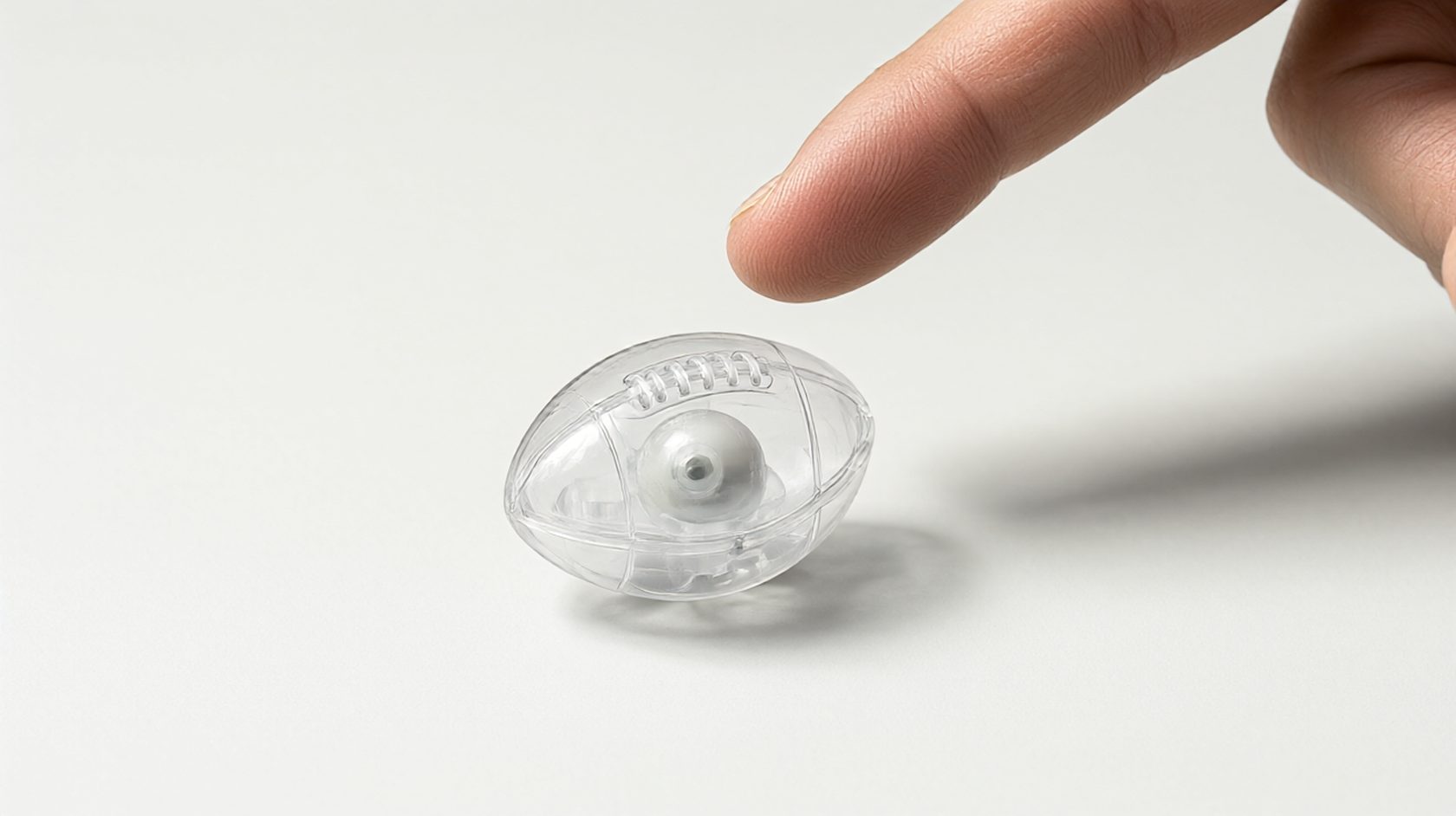
A fidget with a mechanism is a machine
A finger football is a small device with a ball, a pivot and a return spring, and the player flicks the ball and the spring returns it. The toy's appeal is the mechanism, and the mechanism is what wears out.
The wear life of a small mechanism is set by the materials at the two contact points and by the load, and both are invisible in a photograph. A toy that feels crisp in the hand can be two thousand cycles from failure.
A fidget is used far more intensively than a typical toy: a child may flick it thousands of times in a week, and an adult at a desk may do the same. The cycle count is the honest measure of the product.
So a mechanism toy's specification is a cycle specification, and a toy sold without one is a toy with an unknown life.
The spring: rate, set and the fatigue that takes it
A return spring is specified by its rate, its free length and its material, and the rate is what decides the feel of the flick. A spring that is too stiff makes the toy tiring; one that is too soft makes the return unreliable.
Springs fail by taking a set, which is a permanent shortening after repeated cycling, and by fatigue fracture at the ends. A set is gradual and a fracture is sudden, and the two need different tests.
The set test is a free-length measurement before and after a stated cycle count. A spring that has shortened by more than a stated percentage has taken a set and will feel different.
The fatigue test is the same cycling continued until fracture, with the count recorded. A spring that survives ten thousand cycles and fails at fifteen thousand is a spring whose life is known.
Pivot wear and the material pair
The pivot is a small shaft in a small bore, and the wear rate is set by the material pair. Two similar plastics wear quickly; a plastic against a metal wears slowly; two metals can gall.
The common choice is a metal pin in a plastic bore, because the plastic deforms slightly and the pin polishes the bore. The failure is a bore that wears oval, which shows as a loose, wobbly ball before it shows as a stuck one.
The wear rate depends on the surface finish of the pin and on the lubrication, and a fidget is usually unlubricated because lubrication attracts dust. An unlubricated plastic bore against a rough pin is a bore that wears out in a few thousand cycles.
The specification should name both materials and the pin's surface finish, plus a wear criterion expressed as a bore diameter change over a cycle count.
The ball and the track it runs in
The ball is a small sphere in a track, and the track's geometry decides whether the ball returns to the same place. A track that is too wide lets the ball wander; one that is too tight binds when the moulding shrinks.
The ball's material matters for the feel: a hard ball on a hard track clicks, a soft ball on a hard track thuds. The feel is the product, so the pair is a design decision and not a purchasing one.
The failure is a track that wears a groove, which changes the ball's path and produces a dead spot. A dead spot is the complaint that a fidget user makes first.
The check is a cycle test with a mark on the ball and a photographic record of its return position. A ball that returns to a different place after a thousand cycles has a track that is wearing unevenly.
Cycle testing: how to run it honestly
A cycle test needs a rig that reproduces the user's input rather than a motor that strokes the toy. A motor-driven rig at a constant force tests the spring and misses the pivot, because a user's flick is a pulse.
The rig should apply a pulse at a stated force and a stated rate, with a rest between cycles, because the rest is when the spring recovers and the pivot cools. A rig that cycles continuously tests a different duty.
The inspection intervals matter: measuring the free length and the bore at every thousand cycles documents the trend, while measuring only at the end documents a failure without a cause.
The test plan should be on the drawing: force, rate, rest, interval and the criteria at each interval. A cycle count without those is a number that cannot be reproduced.
Screws, clips and the joint that loosens
A mechanism toy is usually assembled with screws, clips or a welded joint, and each loosens differently. A screw in a plastic thread loses preload as the plastic creeps; a clip loses its snap as the plastic relaxes.
The creep is temperature dependent, so a toy in a warm car loses its preload faster than one at room temperature. A toy that is tight on the bench and loose after a summer in a car has a creep problem.
The fix is a thread with a larger engagement or a clip with a longer elastic arm, and both are tool changes. A screw with a thread-locking compound is cheaper and adds a chemical to the toy.
The check is a torque or a snap-force measurement before and after an accelerated age at fifty degrees for a week. A joint that loses more than a stated percentage has a creep problem that the field will find.
Assembly tolerance and the toy that binds
A small mechanism has several parts stacked, and the tolerances accumulate. A stack of five parts each at the top of its tolerance is a stack that binds, and the binding appears in some units and not in others.
The accumulation is predictable, and the design should have a worst-case calculation rather than a nominal one. A design that only works at nominal is a design that produces a percentage of binds.
The bind shows as a ball that sticks at one point in its travel, which is the same symptom as a worn track but appears new. Distinguishing the two requires a measurement of the stack height.
The specification should state the stack height with its tolerance and the clearance at the worst case. A clearance stated at nominal is a clearance that does not exist in the worst unit.
Small parts and the mechanism that comes apart
A mechanism toy contains a ball, a pin and a spring, and each is a small part. If the toy can be disassembled by a child, the parts become accessible and the age grade changes.
The accessible small parts test is a probe and a torque test on the closure, plus a determination of whether the parts can be freed without a tool. A screw that a child can undo is an accessible part.
The design answer is a closure that requires a tool or a tamper-resistant screw, or a mechanism that cannot be opened without destroying it. The first is cheaper and the second is more robust to a determined child.
The specification should state the closure type and the result of the accessibility test, and the age grade should follow the test rather than the marketing.
The sound the toy makes and the material that damps it
A fidget's sound is part of its appeal and part of its rejection. A mechanism that clicks crisply is satisfying; one that rattles is cheap. The sound is produced by the impact of the parts and damped by the materials.
A soft housing damps the click and makes the toy feel dull; a hard housing transmits it and makes it feel precise. The housing material is therefore a sound decision as much as a structural one.
The sound also changes with wear, because clearances grow and the impacts become softer and then rattly. A toy that sounds right new and rattles at five thousand cycles has a wear problem that the ear detects before the hand.
The check is a recorded sound at zero and at a stated cycle count, compared by a panel. A shift in the spectrum is an early wear indicator and it is cheaper than a dimensional check.
Eight lines for a mechanism fidget
Eight lines carry a mechanism fidget: spring rate with free length and material, pivot material pair with pin surface finish, ball and track geometry with the wear criterion, cycle test plan with force, rate, rest and inspection interval, joint type with a creep allowance, stack height with worst-case clearance, closure type with the accessibility result, and a sound check at zero and at the stated cycle count.
The lines describe a machine, which is what the product is. A toy with a mechanism that is specified like a plush will fail in the hand rather than on the shelf.
The two lines that decide the complaint rate are the cycle plan and the stack clearance, because those are the two that a new-unit inspection cannot see.
Write the eight, keep a reference unit cycled to the stated count, and re-qualify when the spring, the pin or the housing material changes. Those three move all eight.
The fidget whose cycle plan names a force, a rate and a rest is the finger football fidget, and those three are what make a wear figure reproducible.
- 01Spring rate, free length and material stated; set measured after cycling.
- 02Pivot material pair named with the pin's surface finish.
- 03Ball and track geometry stated, with a dead-spot criterion after cycling.
- 04Cycle test plan with force, rate, rest between cycles and inspection intervals.
- 05Joint type named with a creep allowance after a week at fifty degrees.
- 06Stack height tolerance with a worst-case clearance calculation.
- 07Closure type stated, with the accessible small parts result.
- 08Sound compared at zero and at the stated cycle count; no rattle at the end.