A 126-piece slime kit: the small parts, the boron and the age grade that ties them
A craft kit is a collection of small objects with a chemical in the middle. The compliance question is not about the slime but about everything around it.
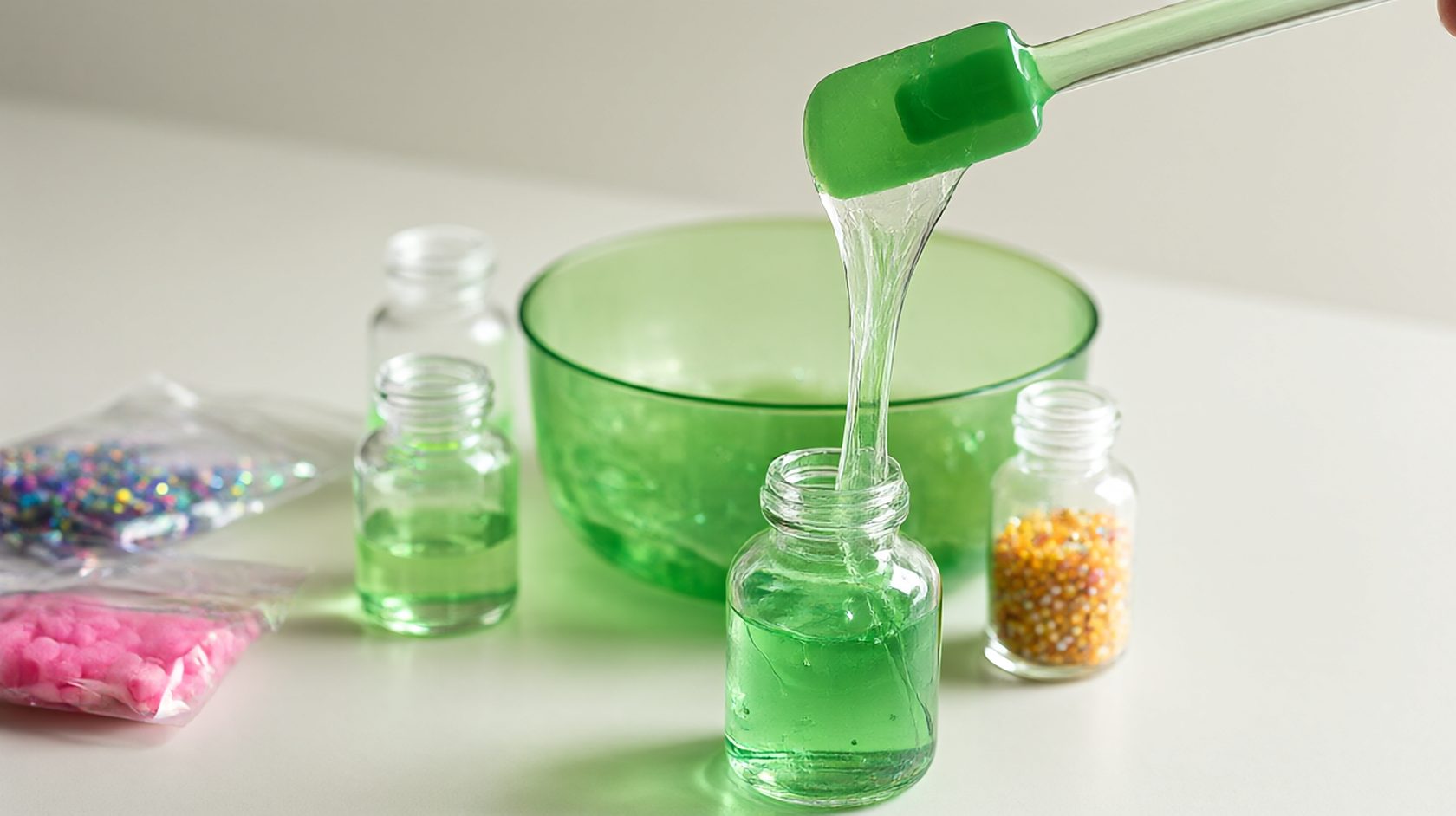
A kit is a set of small parts before it is a toy
A slime kit contains beads, charms, tools, a mixing bowl, an activator bottle and a powder sachet, and every one of those is a small object that a child can put in a mouth. The kit's age grade is set by its smallest and most accessible piece.
The usual failure is a kit graded for six years and up that contains a bead at twelve millimetres, which is a small parts risk for a child who still mouths. The grading was set by the slime and not by the beads.
The check is a small parts cylinder test on every loose component, plus a determination of which ones are accessible without opening a secondary package. A bead inside a sealed bag inside a box is not accessible; a bead in an open tray is.
The specification should list every component with its dimensions and its packaging level, because accessibility is a packaging property as much as a size property.
Boron: the chemistry that makes slime work
Borax and boric acid are the crosslinkers that turn a polymer dispersion into a slime, and they are also the substance that most regulators look at first in a craft kit. The slime does not work without them and the kit does not pass without a limit on them.
The relevant figure is the boron content in the finished slime, not the concentration in the activator bottle. A bottle at four per cent diluted into a slime at a tenth of the mass gives a very different number.
The limit is market-specific and often expressed as a migration or a content figure, and a kit that meets one market can fail another. The compliance file has to state the market and the figure, and cannot be a generic statement about boron.
The practical route is a formulation at the low end of the working range, with a note in the instructions on the ratio. A slime that needs more activator to set is a slime that carries more boron.
The activator bottle is the part that leaks
The activator is a liquid in a small bottle, and it is the component most likely to leak in transit. A leaked bottle is not only a lost component; it is a corrosive liquid in contact with other components in the same box.
The bottle's closure is usually a dropper or a flip cap, and both fail at the seal. A dropper that is shipped upright is fine; one that is shipped on its side in a carton is a dropper that will seep.
The fix is a closure with a secondary seal, or a bottle that is held upright by the insert. Both are cheap at the design stage and impossible to add after the carton is printed.
The transport test is a carton inverted for twenty-four hours at forty degrees, then opened and inspected. A carton that passes upright and fails inverted has a closure problem that the shipping chain will find.
Powder sachets and the dust they release
A powder component, whether it is the polymer or a decorative powder, releases dust when opened, and dust is an inhalation and an eye risk in a kit used by children. The sachet's opening is the exposure point.
A sachet that tears wide open dumps the powder; one with a controlled tear releases it slowly. The difference is the notch and the film, and it costs nothing to specify.
The powder also has to be labelled with its hazards and its first aid, and the label has to be legible at the sachet's size. A sachet with a five-point warning is a sachet that no one reads.
The specification should name the sachet film, the tear notch and the label content with its minimum type size. A powder without a readable label is a powder that will be handled wrongly.
Instructions as a safety document
A craft kit's instructions are the safety document, because the hazards are created by the mixing rather than by the components. A kit with good components and vague instructions is a kit that produces a hazard in the home.
The instructions have to state the ratio, the mixing container, the ventilation, the age, the supervision and what to do if the slime is swallowed or reaches an eye. Those six items are the ones that a recall investigation looks for.
The ratio is the most important, because a slime mixed with too much activator is a slime with more boron than the tested formulation. A kit that tests at one ratio and instructs another has a compliance gap.
The instructions should be tested by asking a group of users to follow them without help, and by checking whether the resulting slime matches the tested formulation. A kit whose instructions produce a different product is a kit whose test does not apply.
Component count and the missing piece
A 126-piece kit is counted by weight or by an automated counter, and a kit that is short by two pieces is a kit that generates a complaint. The count is a quality figure and it is measurable.
The counting method matters more than the target: a weight-based count is accurate for uniform pieces and wrong for mixed ones. A kit with beads of three sizes weighed against one average will be short of the large and long of the small.
The check is a piece count on a sample of kits, by type, at the start and the end of the packing run. A kit that is correct at the start and short at the end has a feeder problem rather than a counting problem.
The specification should state the count with a tolerance per type, not as a total. A total count hides the substitution of five cheap pieces for five expensive ones.
The box that has to hold a wet product
A slime kit contains a wet component and a dry one, and the box has to keep them apart. A box that allows the slime to touch the powder produces a lump that the customer reads as a manufacturing defect.
The separation is usually a divider or a sealed bag, and both are specified by the packaging rather than by the toy. A divider that is omitted to save cost is a divider that the complaint will reinstate.
The box also has to resist the moisture, because a carton that absorbs water softens and loses compression strength. A kit in a damp warehouse arrives with a soft box and a damaged toy.
The packing specification should name the divider, the bag material and the carton grade, plus the storage humidity. A kit specified without a humidity limit is a kit specified for a dry warehouse that may not exist.
Age grading and the supervision line
A craft kit's age grade is usually six or eight years, and the grade is justified by the supervision requirement as much as by the components. A grade that says eight plus and an instruction that says adult supervision is a grade with two messages.
The two messages have to agree, because a regulator reads them together. A kit graded for six with a supervision line is acceptable if the supervision is specific about what the adult does.
The specific supervision is the useful part: which step needs the adult, and why. A generic line about supervision is a line that transfers liability without transferring information.
The specification should name the steps that require an adult and the reason for each, and should test whether the instruction is followed. A supervision line that no one can locate in the process is a line that does not exist.
The chemical file for a kit with four chemicals
A slime kit can contain a polymer powder, a borate activator, a fragrance and a colourant, and each of those has its own safety data and its own limit. A file organised by toy rather than by component will miss one.
The file should have a line per component with its CAS number, its concentration in the finished product, its limit in the target market and its test report. Four components means four lines, even when three of them are inert.
The fragrance is the component most often undocumented, because it is bought as a mixture and the mixture's components are not disclosed. A fragrance without a full declaration is a fragrance that cannot be assessed.
The file's test reports should be on the finished slime rather than on the raw materials, because the mixing changes the concentration. A report on the powder is a report on a different substance.
Recall vectors and the one that matters
A craft kit has three recall vectors: a small part accessible to a young child, a chemical above a limit, and a hazard created by the instructions. The first is the most common and the cheapest to prevent.
The small part vector is preventable by packaging, because accessibility is a packaging property. A bead in a sealed bag is not accessible; the same bead in an open tray is the recall.
The chemical vector is preventable by formulation and by testing the finished product. The instruction vector is preventable by user testing, which almost no kit does.
A kit programme that addresses all three is a kit programme with a packaging spec, a formulation spec and a user test. The three are separate documents and the third is usually missing.
Nine lines for a craft kit
Nine lines cover a slime kit: a component list with dimensions and packaging level, small parts accessibility determined per component, boron content in the finished slime with its market, activator closure with a secondary seal, sachet film with a tear notch and label size, instructions with the tested ratio and the specific supervision steps, count tolerance per type, box divider and carton grade, and the chemical file per component.
The lines are a packaging spec and a formulation spec joined by an instruction spec, which is what a kit is. A kit that has only one of the three has one third of a compliance file.
The lines that decide the recall risk are the accessibility determination and the finished-slime test, because those are the two that a component-level review will pass and a market will fail.
Write the nine, keep one retained kit per formulation lot, and re-qualify when any component, the fragrance or the packaging changes. A kit is a system, and a system moves when one part does.
The kit that lists every component with its packaging level is the 126-piece DIY slime kit, and the level is what turns a bead from an accessible part into a sealed one.
- 01Component list with dimensions and the packaging level of each item.
- 02Small parts cylinder test on every loose component, with accessibility noted.
- 03Boron content measured in the finished slime, against the target market limit.
- 04Activator bottle closure with a secondary seal; carton inversion test at forty degrees.
- 05Powder sachet film and tear notch named, with a minimum label type size.
- 06Instructions state the tested ratio, and user testing confirms the result matches.
- 07Count checked by type at start and end of the packing run, tolerance per type.
- 08Box divider and carton grade stated, with a storage humidity limit.